
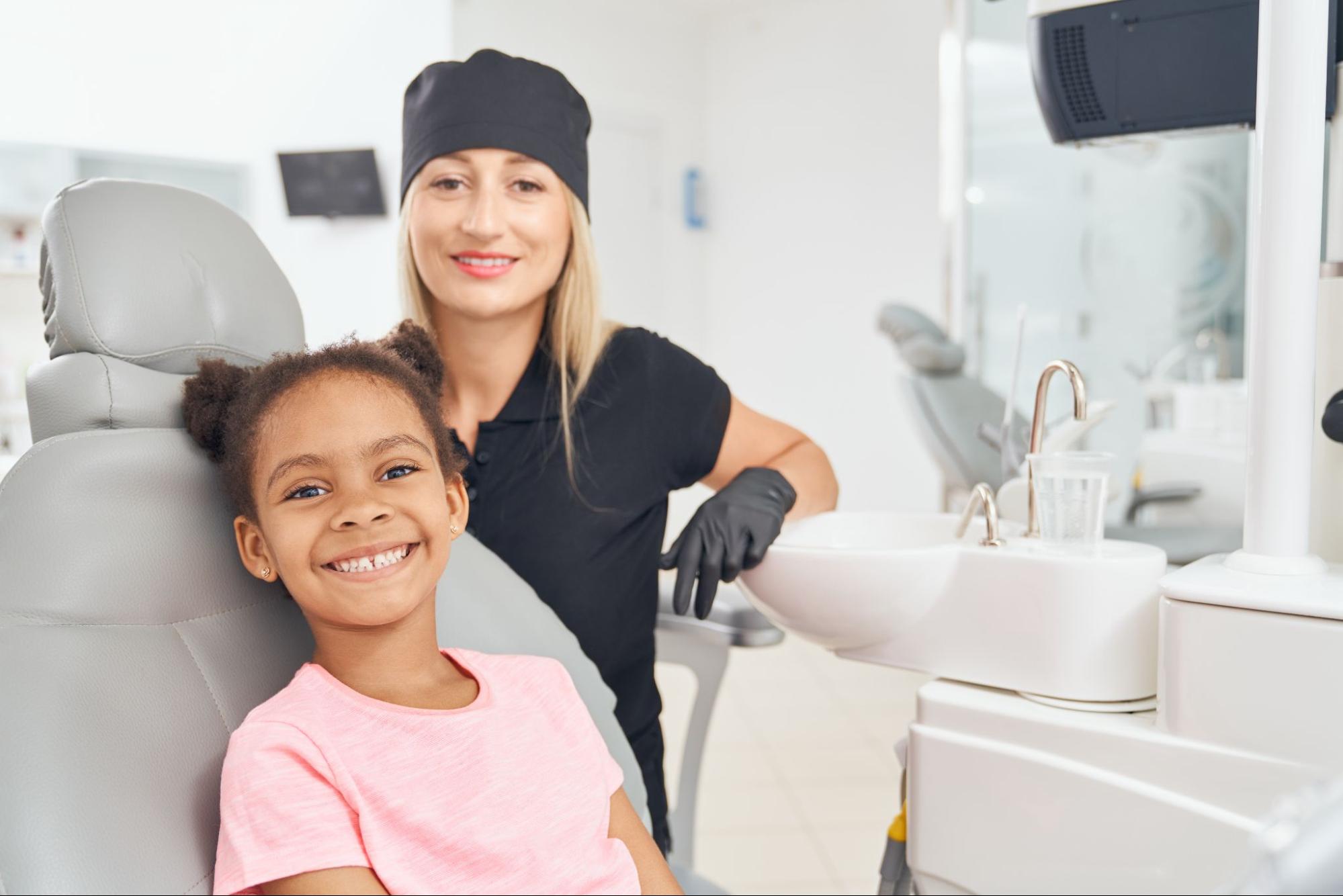
Booking your child’s first orthodontic appointment can feel like a bigger step than it is. Most parents picture a chair, a bright light and a conversation about braces. That is not what this visit is.
A first orthodontic evaluation is a look, not a procedure. Dr. Younis spends the appointment learning how your child’s mouth is developing and then tells you what he sees. Here is how the visit actually goes.
What Happens at Your Child’s First Orthodontic Evaluation
The whole appointment usually runs under an hour and there is nothing invasive about any of it.
Reviewing Your Child’s History
The visit starts with a conversation rather than an exam. Dr. Younis will ask about your child’s dental history, any concerns your dentist has raised and anything you have noticed at home. If your child has had a tooth come out early, has trouble chewing certain foods or still sucks their thumb, this is the moment to mention it.
Parents often worry they will not know what is relevant. Bring whatever you have wondered about. The signs worth watching for are a useful starting point if you want to think it through beforehand.
Digital Images and X-Rays
Most of what determines a child’s bite is happening under the gums where nobody can see it. Digital images and X-rays show where the permanent teeth are sitting, whether they have a clear path in and how the upper and lower jaws relate to each other.
This part takes a few minutes. Your child stands or sits still while the images are captured. There is no discomfort involved and nothing goes in their mouth beyond a small positioning piece.
The Exam Itself
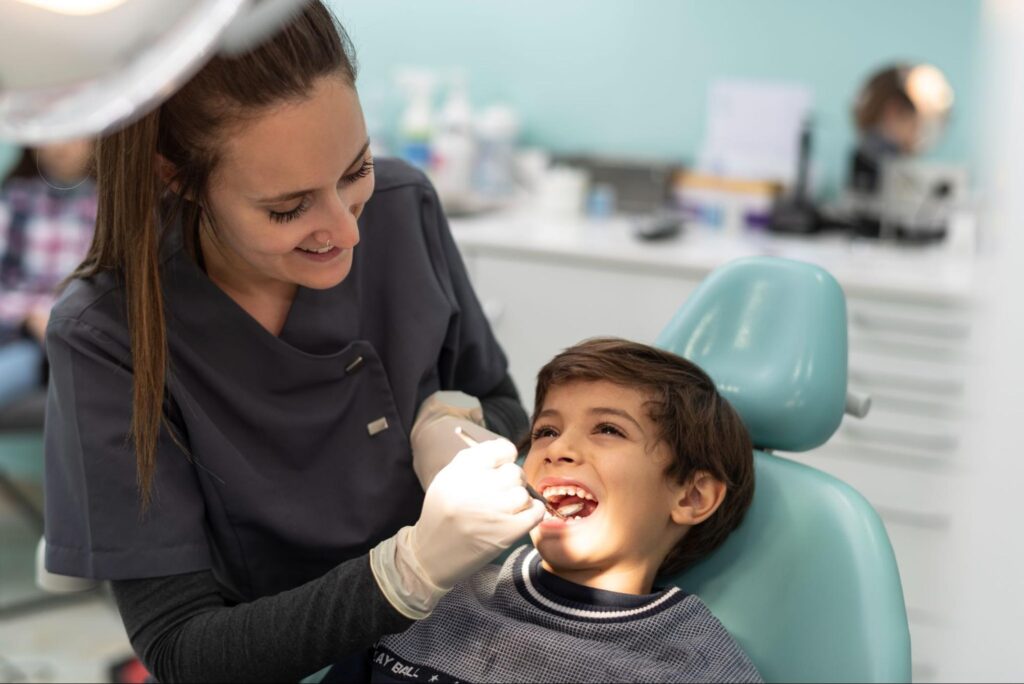
Dr. Younis will look at how the teeth are coming in, how the bite closes and how the jaws are growing in relation to one another. He checks for crowding, spacing, crossbites, underbites, overbites and teeth erupting at unusual angles.
No drilling and no instruments beyond a mirror. For most children this is the easiest dental appointment they have ever had.
The Conversation at the End
This is the part that matters most to parents. Dr. Younis walks you through what he found in plain language, shows you what he is looking at on the images and answers whatever you want to ask. You leave knowing where your child stands.
Three Ways the Visit Can End
Every first evaluation lands in one of three places, and two of the three involve doing nothing yet.
Everything Looks Fine
Plenty of children come in at seven with nothing that needs attention. You go home with the reassurance that development is on track and you are welcome to come back if something changes.
We Watch and Wait
This is the most common outcome. Dr. Younis spots something worth tracking but treating it now would be premature. Your child comes back periodically so he can see how the situation develops, and treatment starts only when the timing is right.
These check-ins are short and they are the reason early evaluation is worth doing. Catching the right moment is far easier when someone has been watching all along.
Early Treatment Is Recommended
In a smaller number of cases, there is a clear reason to act while your child is still growing. That is where interceptive orthodontics comes in, using targeted appliances to guide development rather than correct it later. Our page on orthodontics for children covers how phased treatment works if Dr. Younis recommends it.
Why Age Seven
The American Association of Orthodontists recommends a first evaluation around age seven. At that point most children have a mix of baby and permanent teeth, which is exactly the combination that reveals how things are heading.
Wait much longer and some of the easier options close off, because they depend on jaw growth that is still underway. Come in much earlier and there is often not enough to see yet.
Helping Your Child Feel Comfortable
Kids take their cue from you. If you treat the appointment as routine, they usually will too.
It helps to tell them ahead of time that nobody is going to do anything to their teeth, that the orthodontist is just going to look and take some pictures. Avoid words like hurt or scary even when reassuring them, since those tend to plant the idea rather than remove it. Our Martinsburg office was built with younger patients in mind, and you can see what to expect before you arrive on our first visit page.

What Comes Later
Whether treatment starts at eight or fourteen, the evaluation is what makes the timing deliberate instead of accidental. When your child is eventually ready for comprehensive care, braces and clear aligners are both on the table, and Dr. Younis will have years of context behind whichever he recommends.
Common Questions
How long does a first orthodontic evaluation take?
Most first evaluations at Younis Orthodontics take under an hour from arrival to walking out. That covers reviewing your child’s history, capturing digital images or X-rays, the exam itself and the conversation about what Dr. Younis found. If your child needs treatment down the road, that gets discussed at the same visit rather than requiring you to come back.
Will my child need X-rays at their first orthodontic visit?
Usually yes. Much of what determines how a bite develops happens below the gum line, where permanent teeth are still forming. X-rays show whether those teeth have room to come in and how the jaws relate to each other, which cannot be assessed by looking alone. The images take a few minutes and are not uncomfortable for your child.
What should I bring to my child’s first orthodontic appointment?
Bring your insurance information and any records or X-rays your dentist has taken recently, since those can save time. It also helps to write down anything you have noticed at home or any question you want answered. You do not need a referral from your dentist to schedule the appointment.
Schedule Your Child’s Evaluation
If your child is approaching seven, or is older and has never been seen, book a free consultation at Younis Orthodontics in Martinsburg. You will leave knowing what is happening with your child’s smile and what, if anything, needs to happen next.