

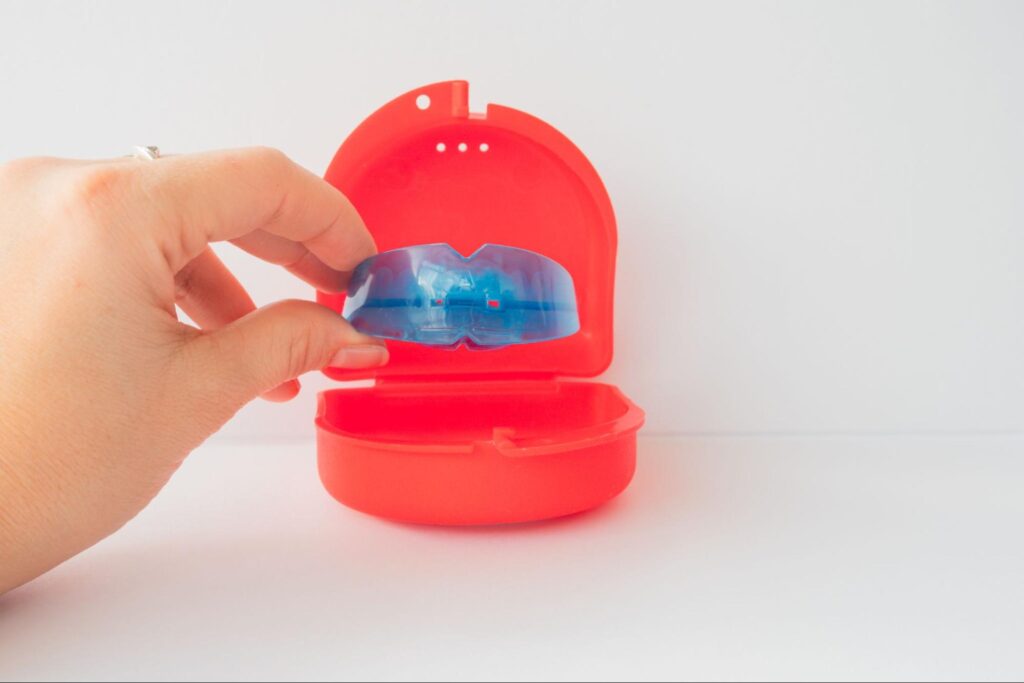
A mouthguard for braces is a protective tray designed with extra depth and flexibility so it seats over brackets and wires instead of pressing against them. A standard athletic mouthguard is molded tight to bare teeth, which is exactly what you do not want when brackets are in the way. The wrong guard can pop brackets off on impact rather than protect them. Dr. John Younis has been treating athletes in Berkeley County since 1995, and this comes up in the chair every fall when sports season starts.
Why Braces Change the Math on Mouthguards
The American Dental Association recommends a properly fitted mouthguard for any activity carrying a real risk of dental trauma, and notes that an effective guard has to be comfortable, resistant to tearing and resilient enough to absorb impact. Braces raise the stakes on all three points.
Brackets and wires create hard edges against the inside of the lips and cheeks. A hit that would leave an unbraced mouth bruised can leave a braced mouth cut. The orthodontic hardware itself is also at risk, and a broken bracket or a bent wire means an unscheduled repair visit and treatment time you do not get back.
Some governing bodies already treat this as non negotiable. The National Federation of State High School Associations requires wrestlers wearing braces to wear a mouthguard, and mandates guards outright in football, field hockey, ice hockey and lacrosse. If your athlete competes in any of those, the question is not whether to get one but which kind.
The Three Types, Side by Side
Every mouthguard on the shelf falls into one of three categories. They are not equally suited to orthodontic patients.
| Type | How it fits | Works with braces? |
|---|---|---|
| Stock | Preformed, worn straight out of the package | Poorly. One size fits all means loose, bulky and easy to dislodge mid play |
| Boil and bite | Softened in hot water, then molded to the bite at home | Only if labeled for braces. A standard version molds tight to brackets and can pull them loose |
| Custom fitted | Made from a digital scan or impression taken in office | Best option. Built around the hardware with room for teeth to shift |
The practical trade off is fit against convenience. A boil and bite guard from a sporting goods store can be ready the night before a game. A custom guard takes a visit and a turnaround, but it stays put, breathes better and does not get spat onto the sideline halfway through the second quarter, which is the real reason most guards fail to protect anyone.
One caution on boil and bite guards. If you go that route while in metal braces or clear braces, buy a version made specifically for orthodontic patients and follow the molding instructions loosely rather than biting down hard. A guard that grips the brackets is working against you.
Mouthguards and Invisalign Are a Different Question
Aligner trays are not protective equipment. They are thin, rigid and made to move teeth, not to absorb a hit. Taking an elbow while wearing them can crack a tray and set treatment back while a replacement is made.
The routine for Invisalign patients is to remove the trays before practice or a game, store them in their case rather than a pocket, and wear a mouthguard instead. Because aligner patients have no brackets, a standard well fitted guard works fine. Put the trays back in immediately afterward so the daily wear time stays where it needs to be.
The same logic applies to retainers once active treatment ends. Retainers come out for contact sports and a mouthguard goes in.
What a Mouthguard Actually Prevents
Most of what shows up as an orthodontic emergency after a game falls into a short list, and a properly fitted guard reduces the odds on all of it.
- Brackets knocked loose from the tooth surface
- Archwires bent out of position or poking into the cheek
- Lacerations to the lips and inner cheeks from contact with hardware
- Chipped or fractured teeth, which complicates treatment well beyond the repair itself
None of these are dramatic on their own. What they share is that they interrupt the sequence. Braces work by applying steady pressure over months, and every unplanned repair visit is a pause in that pressure.
Keeping It Clean and Knowing When to Replace It
A mouthguard spends its life in a gym bag, which is not a hygienic place. The care routine is short and it matters more than most people assume.
- Rinse it in cool or lukewarm water before and after every use
- Brush it a few times a week with a soft toothbrush and mild soap, not toothpaste, which is abrasive enough to scratch the surface
- Store it in a ventilated case so it dries out instead of sitting damp
- Keep it away from heat. Hot water and a parked car will both warp it out of shape
Replacement timing is different for orthodontic patients than for everyone else. Teeth are actively moving, so a guard that fit in September may not seat correctly by January. Check the fit at each adjustment appointment and expect to replace a custom guard at least once during a long treatment. Any cracking, thinning or chewed through spots means replace it now regardless of age. The same goes for brushing and flossing around braces, where the routine changes as treatment progresses.

Getting Fitted in Martinsburg
Our office at 2003 Professional Ct in Martinsburg sees athletes from across the Eastern Panhandle, including families coming in from Inwood, Spring Mills and Charles Town. Fall sports fill the schedule quickly, so the fitting conversation is easiest before the season rather than after the first hit.
If your athlete is already in treatment, bring it up at the next adjustment appointment. Dr. Younis can look at where the teeth are in the sequence and advise on whether a custom guard makes sense now or whether it is better to wait for a stage where the fit will hold longer. If you are not a patient yet, a free consultation is the place to start.
Common Questions
Do I need a special mouthguard if I have braces?
Yes. A standard mouthguard is molded tightly to the shape of bare teeth. With braces, that tight fit grips the brackets, and an impact transfers force directly into the hardware instead of absorbing it. Look for a guard labeled for orthodontic patients, or have a custom one made.
Can I wear a mouthguard over Invisalign trays?
No. Remove the trays, store them in their case and wear the mouthguard on its own. Put the trays back in as soon as you are off the field so daily wear time stays on track.
Does the mouthguard go over the top braces or the bottom?
The upper arch is the standard, since it takes the majority of direct impacts. Patients with brackets on both arches sometimes wear a dual guard, which is a conversation to have based on the sport and the stage of treatment.
How often should a mouthguard be replaced during orthodontic treatment?
More often than for someone without braces, because the teeth are moving underneath it. Check the fit at every adjustment visit and replace it as soon as it feels loose, shows cracks or has chew marks worn through.
Are mouthguards required for school sports in West Virginia?
Requirements are set by the National Federation of State High School Associations and adopted at the state level. Guards are mandated in football, field hockey, ice hockey and lacrosse, and wrestlers wearing braces are required to wear one. Individual schools and leagues can set stricter rules, so check with the coach.
Reviewed by Dr. John Younis, DDS, Younis Orthodontics, Martinsburg, WV.